— Thane's transparent RO process

Test first. Install after. Numbers on paper.

Every ClearTDS job starts with a calibrated meter at your tap. You see the TDS reading, we explain what it means, and the work begins only after you agree to the plan.
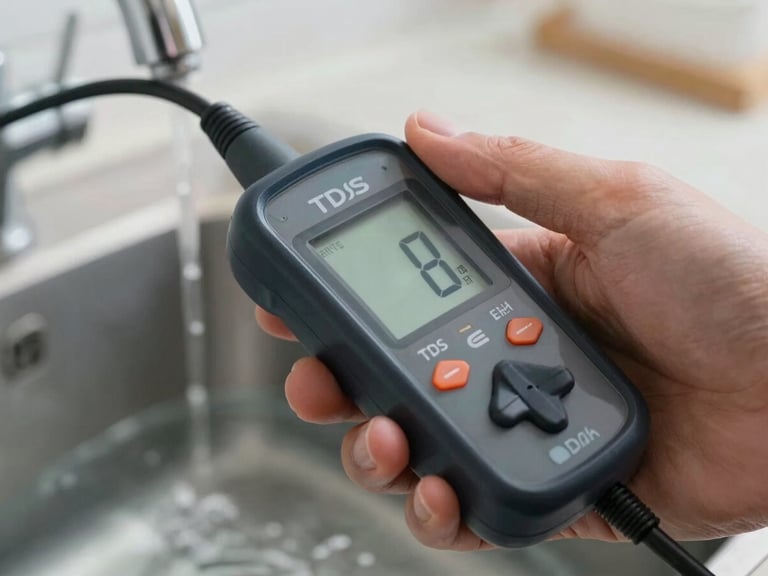
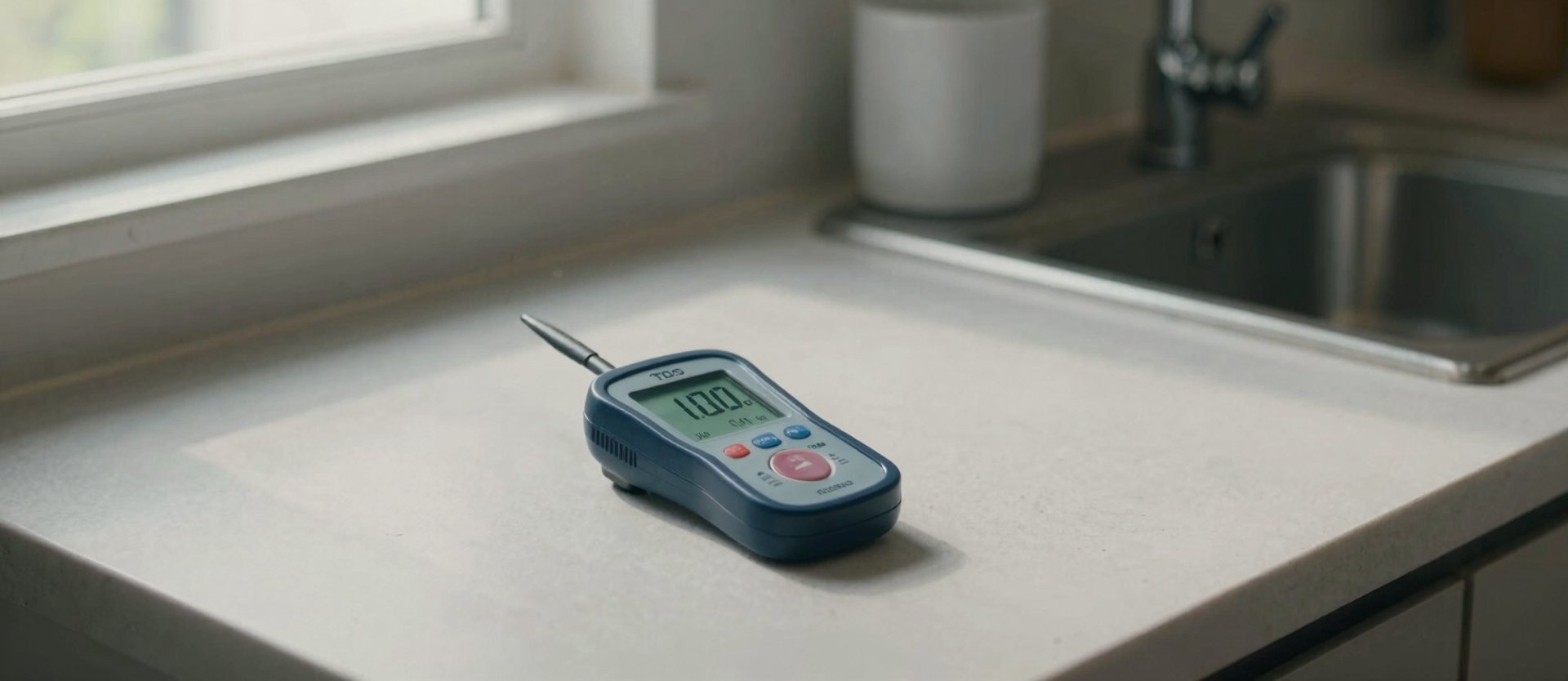
Extreme close-up of a technician's hand holding a digital TDS meter probe submerged in tap water, meter display showing a three-digit reading, kitchen sink background slightly out of focus, soft overhead light, sharp focus on the meter digits
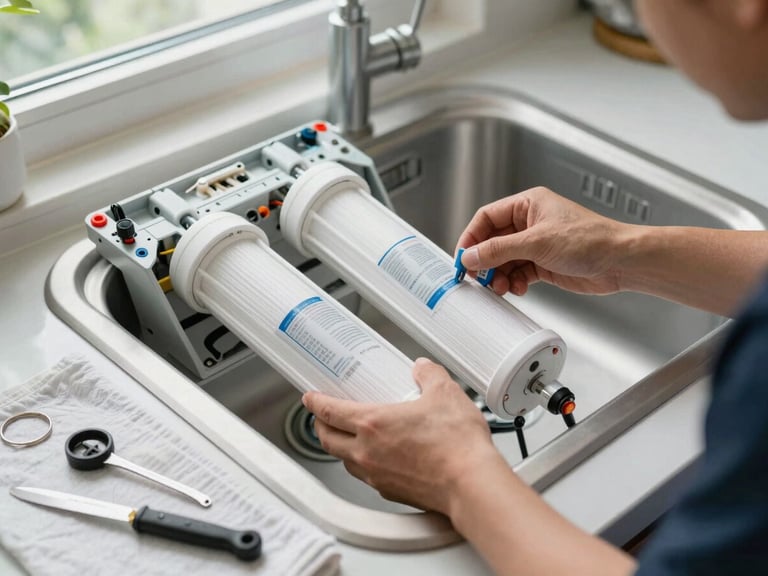
Technician's hands carefully mounting a multi-stage RO filter housing under a kitchen sink, filter cartridges visible and clearly labeled, natural daylight from a nearby window, tools laid out neatly on a cloth, residential kitchen setting
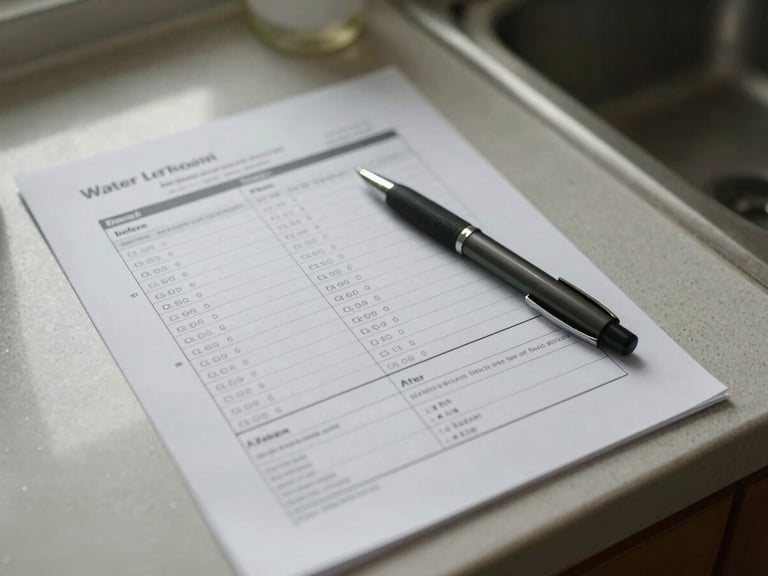
Overhead close-up of a printed water test report on a kitchen counter showing two columns of TDS readings labelled before and after, a pen resting beside it, soft natural window light, no faces visible
/ Four steps, one visit

What happens on the day

Step 1 — Tap water test

We arrive with a factory-calibrated TDS meter. You watch the reading appear — typically 350–800 ppm in Thane West — and we record it on your job sheet before touching any equipment.

Step 2 — Single-visit installation

The full installation — unit mounting, inlet connection, storage tank, and post-filter tap — is completed in one visit, typically 90 minutes. No return trips, no dangling fittings.

Step 3 — Post-install verification

Before we leave, we re-test the output water. The printed report you receive lists the before reading, the after reading, and the target TDS band — typically 30–80 ppm — so you know what changed.
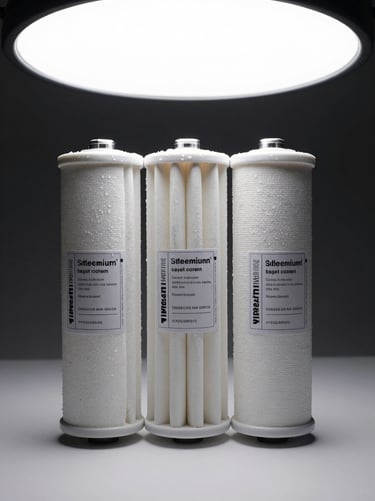
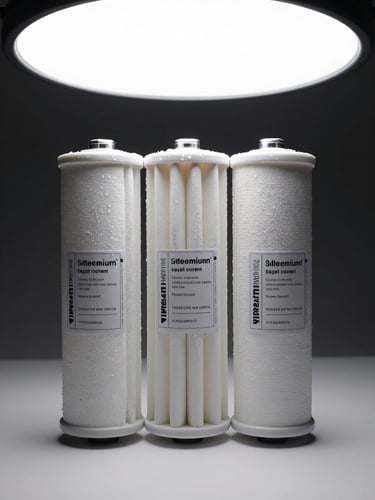
Close-up of three cylindrical RO filter cartridges laid side by side on a clean white surface, each with a visible label showing filter stage name, soft studio strobe light from above, slight water droplets on the outer casing, no text visible on labels
Numbers, not promises

What TDS means for your household

Thane municipal water typically arrives at 400–700 ppm TDS. Above 300 ppm, you'll notice scale on appliances and a mineral taste. Our RO stage reduces output to 40–80 ppm — the BIS-recommended drinking range.

Maintenance schedule at a glance

Sediment and carbon pre-filters: every 6 months. RO membrane: every 18–24 months. Post-carbon polishing filter: every 12 months. We send an SMS reminder 2 weeks before each interval is due.

See your tap's TDS number today

Book a free water test. We bring the meter, record the reading with you present, and explain every number before any commitment.